
Understanding Myopia in Children
Myopia, commonly known as nearsightedness, is a vision condition in which distant objects appear blurry while close objects remain clear. The condition often develops during childhood and may progress as the eyes continue to grow.
Myopia occurs when the eye grows too long from front to back, or when the cornea curves excessively. Light entering the eye focuses in front of the retina instead of directly on it. As a result, distant vision becomes blurred.
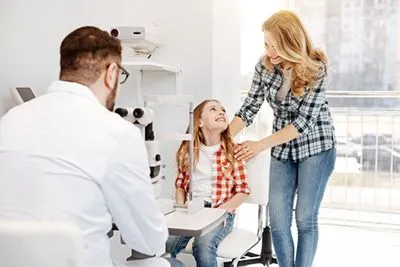
Signs Your Child May Need Myopia Treatment
Children do not always recognize that their vision has changed. Parents and teachers often notice the symptoms first. Several signs may indicate that a child needs professional evaluation.
Common symptoms include squinting, frequent headaches, eye strain, or sitting very close to screens and books. Some children also struggle to see distant objects clearly during school activities or sports.
When these symptoms appear, scheduling an appointment with an optometrist is recommended. A professional eye exam can confirm the diagnosis and determine whether myopia treatment is necessary.
The Best Time to Start Myopia Control
Myopia treatment is most effective when it begins early. Many eye care professionals recommend starting myopia control when a child is first diagnosed with nearsightedness. Children between the ages of six and twelve often benefit the most from early intervention.
During childhood, the eyes continue to grow and develop, and myopia can worsen as the eye length increases. Myopia control strategies are designed to slow this progression and protect long-term eye health.
Myopia Treatment Options
Several treatment approaches are available to help manage childhood myopia. Specialized contact lenses and prescription eyeglasses are commonly used in myopia control programs. These lenses are designed to change how light focuses on the retina, which can help reduce eye growth over time.
Other treatment options may include specially designed lenses worn overnight or customized daytime lenses. Each treatment plan is tailored to the child’s age, lifestyle, and visual needs.
Choosing an Optometrist for Myopia Care
Professional eye care plays an important role in protecting a child’s vision. Our optometrist performs detailed eye examinations, monitors vision changes, and recommends treatments that support your child’s eye health.
Beal Eye Care in Columbus, OH, provides comprehensive vision care for children and families. To learn more or schedule an appointment, call our office at (614) 846-7336. Our experienced optometrist near you can evaluate your child’s vision, diagnose myopia, and recommend a personalized treatment plan designed to slow progression and support healthy eyesight.